Rome looms so large in European history, and therefore on the ancient and medieval European wargames that informed so much of early fantasy RPG’s, that an article like this seems a bit useless. Of course, I’m writing it anyway, because – dang – you try generating this much web content without being useless once in a while.
Enough preamble. Let’s get down to Roman weaponry …
BIPENNIS
The bipennis, or labrys, is a double-headed axe that, depending on how one pronounces the word, could be a big hit at the gaming table. “You attack the orc with what?”
The weapons were most associated with Minoan civilization and the Greeks, and seem to have taken on quite a significant symbolic meaning, being adopted by Greek fascists, Greek metal heads and lesbians and feminists – clearly it’s a uniter and not a divider (unless used to separate somebody from their head). If you’re a cleric capable of wielding edged weapons, the bipennis might be a good one to wield.
Medium weapon; 1d8 damage; 6 lb.; 10 gp
CESTUS
Probably one of the first, “Dude, I want those” that I ever came across as a young geek getting into RPG’s. Essentially the anti-boxing glove, a cestus was made of leather strips, sometimes studded with metal or bladed, that was worn over the hands and used to beat the living crap out of people. For our purposes, we’ll use all three versions, and allow monks using the cestus, and any character with the Weapon Focus feat in the cestus, to treat them as either unarmed attacks or armed attacks, whichever is more favorable for the situation.
Cestus: Light weapon; +1 damage; 0.5 lb; 5 sp
Cestus, Studded: Light weapon; +2 damage; 1 lb.; 1 gp
Cestus, Bladed (Myrmex): Light weapon; +3 damage; 1 lb.; 1 gp 5 sp
FALCATA
The name is new, but the sword is old. Rome’s Iberian allies and mercenaries employed these slightly curved, thick bladed swords and impressed their Roman pals with how effective they were in a scrap. Because of their shape, and the weight of their blade, a falcata scores a critical hit (if you use such things) on a natural roll of 19 or 20.
Light weapon; 1d4+1 damage; 2 lb.; 15 gp
FALX
Falx are sickle-like weapons employed by the Dacians and Thracians, and later used by the Romans as siege hooks. The single-handed version was the sica, which is essentially just a sickle and is not covered here. The falx was the two-handed version, a pole weapon with a 3-ft. long wooden haft tipped by a long, sickle-shaped blade. The point could pierce helmets and the blade split shields.
Heavy weapon; 1d8 damage; 8 lb.; 8 gp
GLADIUS
While not the first straight-bladed short sword, the gladius could be one of the best known due to their use by gladiators, who are undeniably cool. The gladius was adopted from the Celtiberians, and was known as the Gladius Hispaniensis, or “Hispanic Sword”.
Light weapon; 1d6 damage; 2 lb.; 10 gp
HASTA
Hasta means “spear”, which is handy, since hastas are, in fact, spears. They were carried by early Roman legionaries, and gave them the name hastate. In later years, they were abandoned for the javelin and short sword, but they still have their place in classical Roman violence. Hasta were about 6.5 feet long.
Medium weapon; 1d8 damage; 6 lb.; 2 gp
PUGIO
The pugio is the Roman dagger, one of the basic weapons of the Roman soldier (along with short sword, javelins and shield). Nothing fancy here, just a cool name.
Light weapon; 1d4 damage; 1 lb.; 2 gp
PLUMBATA
I remember when I first got into AD&D, the darts confused me. The only darts I had ever seen were the ones used with dart boards, and I always pictured with a smile magic-users throwing those little things at people in dungeons. The plumbata is the real deal though, the mother of all lawn darts. These darts are weighted with lead and had barbed heads. Magic-users can hurl these bad boys with their heads held high.
Thrown weapon; 1d4 damage; 0.5 lb.; 5 sp
SCISSOR
Yes, you can run with this. The scissor is a “maybe” weapon, about which very little is known. It might have consisted of a hollow, metal tube that was worn over the arm. The tube closes over the fist, and projected from this there is a semicircular blade. There was probably a crossbar in the end to assist in a gladiator controlling the weapon. The tube makes it useful as both a buckler and as a weapon.
Light weapon; 1d4+1 damage; 2.5 lb.; 15 gp
SPATHA
The spatha was the Roman long sword. Measuring about 3 feet in length, it was used in war and gladiatorial fights in first millennium AD Europe. Used primarily by the Germans, it replaced the gladius as the primary infantry weapon of the Romans.
Medium weapon; 1d8 damage; 4 lb.; 15 gp
--
All images found at Wikipedia
Showing posts with label weapons. Show all posts
Wednesday, December 12, 2012
When In Rome, Kill As the Romans Do
Labels:
blood and treasure,
Legacy DnD,
RPG,
RPG Hub,
weapons
Monday, December 3, 2012
Weapon Showcase - India
Let's get one thing straight - Indian weapons are awesome for the names alone. Firangis and kayamkulams and talwars sound wonderful, even if facing one in the hands of an angry kshatriya would be anything but pleasant. I was recently bumping around for the name of one type of sword in particular - the pata - when I came across the others and decided to write about them here, giving them some stats for Blood & Treasure. So, without further ado -
Note - all images come from Wikipedia
Aruval
The aruval is an Indian machete-like weapon. The top section is curved and comes to a point, and gives wielders a +1 bonus to grapple attacks. The base is often kept razor sharp so it can be used for slashing.
Medium weapon; 1d4+1 damage; 2 lb.; 8 gp
Bagh nakh
The famous bagh nakh are also known as tiger's claws. The bagh nakh consists of four or five short, curved, claw-like blades affixed to a metal cross-bar or a glove. Bagh nakh grant the user a +1 bonus to Climb task checks.
Light weapon; 1d3 damage; 1 lb.; 5 gp
Bhuj
The bhuj is also known as a gandasa, or axe-dagger. The dagger blade is affixed to an axe-like haft. The blade is short (7 to 10 inches) and broad, with a gentle curve. The haft is usually hollow and hides another slim, stiletto-like blade.
Light weapon; 1d6 damage (or 1d4 damage from stiletto); 4 lb.; 9 gp
Bichawa
The bichawa is a loop-hilted dagger with a narrow, undulating blade. Based on the maru, or horn dagger, of southern India, it is often used as an ornamental weapon. The loop hilt sometimes serves as a knuckle-guard. The weapons are about 1 foot long.
Light weapon; 1d4 damage; 1 lb.; 2 gp
Firangi
The firangi is a long, straight-bladed sword imported into India from Portugal. The blades were manufactured in Europe, and the name of the sword is derived from the Arabic term for Europeans, al-faranji (i.e. Frank). Blades were usually 3 feet long, and either of the broadsword (double-edge) or backsword (single-edge) variety. Firangi had basket-hilts that provide the wielder a +1 bonus to save vs. disarm attacks. Because of its length, it was traditionally used as a cavalry weapon.
Medium weapon; 1d8 damage; 4 lb.; 15 gp
Gada
The gada is a Indian bludgeoning weapon not too different from a heavy mace. It has a large, heavy metal head in the shape of a ball on a thick, short shaft. It is often used as physical training equipment, and Hanuman favored it as a weapon. Because of the thickness of the shaft, it must be wielded with two hands save by those with a strength score of 16 or higher.
Heavy weapon; 1d6+1 damage; 9 lb.; 12 gp
Kalarippayatt
The kalarippayatt is a 2-1/2 foot long wooden stick that is used as a practice weapon by young warriors learning dagger fighting. It is also used as a weapon in its own right. It is usually made from the wood of the tamarind tree.
Light weapon; 1d3 damage; 1 lb.; 1 gp
Kayamkulam vaal
The kayamkulam vaal is a stately, double-edged dueling blade favored by the aristocracy of Nair. The blade is of medium length and tapers from the hilt to the very sharp point. It was often wielded with a buckler.
Medium weapon; 1d6 damage; 3 lb.; 20 gp
Khanda
The khanda is a broad, straight-bladed sword with very little point. A spike projects from the hilt. The khanda, having virtually no point, is not used for thrusting, but for hacking and slashing, somewhat like an axe. The sword is double-edged and heavy.
Medium weapon; 1d6+2 damage; 4 lb.; 30 gp
Lathi
The lathi is a long staff, usually measuring about 6 to 8 feet in length, and often tipped with metal. A weapon of Indian monks.
Medium weapon; 1d6 damage; 4 lb.; 1 sp
Maduvu
The maduvu is a unique Indian weapon used by the martial artists (i.e. monks) of India. Made from deer horns, it is treated as a double-bladed dagger. Monks using a maduvu keep a low profile, and use it more as a defensive weapon than offensive. Monks armed with maduvu can treat it as a shield rather than weapon during each round of combat.
Light weapon; 1d4 damage; 1.5 lb.; 5 gp
Malappuram Kathi
The malappuram kathi was an ancient form of dagger used in Kerala. The blade is about 2 feet long and thicker at the top than at the base. The hilt was made from deer horn. It is said that wounds from a malappuram kathi were difficult to heal and often became infected. This was owed either to the unique construction of the weapon or the metals used by the very few Keralan blacksmiths who knew the secret of forging the weapon.
Light weapon; 1d3+1 damage; 1.5 lb.; 2 gp
Moplah
Moplah are very short swords with wide blades - wider at the tip than the base. Moplah were worn on the back, using special belts.
Light weapon; 1d6 damage; 2 lb.; 5 gp
Parashu
The parashu is a large, Indian battle axe. Some were double-bladed, while others had a single-blade and a spike. Most were about 5 feet in length.
Large weapon; 1d8+1 damage; 12 lb.; 20 gp
Pata
The pata is a very unique Indian straight-bladed sword that incorporates a gauntlet as the handguard. The wielder places his hand in the gauntlet and the sword is held rigid pointing straight out from the wielder's lower arm. Pata were most often wielded one in each hand, or a pata was wielded in one hand and a javelin, whip or axe in the other. Pata could be from 1 to 4 feet in length, so we can assume that dual-wielders probably used one long pata and one short pata. The gauntlet guard gives the wielder a +2 bonus to save vs. disarm attacks.
Short Pata: Light weapon; 1d4+1 damage; 2 lb.; 10 gp
Long Pata: Medium weapon; 1d6+1 damage; 4 lb.; 15 gp
Talwar
The talwar is a curved sword that originated with the Turkic peoples of Central Asia. Wider than similar Middle Eastern swords, it usually had a disc hilt. Because the blade is not too tilted, it is useful for slashing and thrusting, and because the tip of the blade is especially heavy it was quite useful for amputating and decapitating opponents. When wielded by an attacker with at least a +3 attack bonus (and the Weapon Focus feat, if feats are used in your game), the talwar deals a critical hit on a roll of 19 or 20; though a critical hit on a "19" allows the target a Reflex saving throw to avoid it.
Medium weapon; 1d8 damage; 5 lb.; 15 gp
Trishula
The trishula is an Indian trident that also serves as a potent Hindu and Buddhist symbol. Although as a symbol it is often pictured without the haft, as a weapon is it usually hafted. Hindu clerics of war often choose the trishula as their weapon.
Medium weapon; 1d6+1 damage; 4 lb.; 15 gp
Urumi
The urumi is a long sword with a flexible blade. The blade is sturdy enough to slice through flesh, but flexible enough to be rolled into a coil. The urumi is almost as dangerous to the wielder as it is to the target, and any time an urumi-wielder rolls an attack roll that is less than 20 - his attack bonus, he must pass a Reflex save or suffer 1d4 points of damage. Wielders with an attack bonus of at least +3 (and the Weapon Focus feat if this feat is used in your game) can choose to brandish the weapon, swinging it back and forth before them in arcs - when doing so, any creature attacking them in melee combat with a weapon shorter than 4-ft. must pass a Reflex save each round or suffer 1d4 points of damage.
Medium weapon; 1d6+1 damage; 6 lb.; 28 gp
Vel
The vel is a broad-bladed spear used primarily by the Tamils in combat. The weapon's name is derived from the divine weapon of the Hindu deity Murugan.
Thrown weapon; 1d6 damage; range 40/80; 3 lb.; 2 gp
Murugan's Vel: +3 holy vel; when hurled against a tree, it splits the tree into two halves, which become celestial animals of Murugan's choosing
Note - all images come from Wikipedia
Aruval
The aruval is an Indian machete-like weapon. The top section is curved and comes to a point, and gives wielders a +1 bonus to grapple attacks. The base is often kept razor sharp so it can be used for slashing.
Medium weapon; 1d4+1 damage; 2 lb.; 8 gp
Bagh nakh
The famous bagh nakh are also known as tiger's claws. The bagh nakh consists of four or five short, curved, claw-like blades affixed to a metal cross-bar or a glove. Bagh nakh grant the user a +1 bonus to Climb task checks.
Light weapon; 1d3 damage; 1 lb.; 5 gp
Bhuj
The bhuj is also known as a gandasa, or axe-dagger. The dagger blade is affixed to an axe-like haft. The blade is short (7 to 10 inches) and broad, with a gentle curve. The haft is usually hollow and hides another slim, stiletto-like blade.
Light weapon; 1d6 damage (or 1d4 damage from stiletto); 4 lb.; 9 gp
Bichawa
The bichawa is a loop-hilted dagger with a narrow, undulating blade. Based on the maru, or horn dagger, of southern India, it is often used as an ornamental weapon. The loop hilt sometimes serves as a knuckle-guard. The weapons are about 1 foot long.
Light weapon; 1d4 damage; 1 lb.; 2 gp
Firangi
The firangi is a long, straight-bladed sword imported into India from Portugal. The blades were manufactured in Europe, and the name of the sword is derived from the Arabic term for Europeans, al-faranji (i.e. Frank). Blades were usually 3 feet long, and either of the broadsword (double-edge) or backsword (single-edge) variety. Firangi had basket-hilts that provide the wielder a +1 bonus to save vs. disarm attacks. Because of its length, it was traditionally used as a cavalry weapon.
Medium weapon; 1d8 damage; 4 lb.; 15 gp
Gada
![]() |
| Monks don't have to look like Bruce Lee |
The gada is a Indian bludgeoning weapon not too different from a heavy mace. It has a large, heavy metal head in the shape of a ball on a thick, short shaft. It is often used as physical training equipment, and Hanuman favored it as a weapon. Because of the thickness of the shaft, it must be wielded with two hands save by those with a strength score of 16 or higher.
Heavy weapon; 1d6+1 damage; 9 lb.; 12 gp
Kalarippayatt
The kalarippayatt is a 2-1/2 foot long wooden stick that is used as a practice weapon by young warriors learning dagger fighting. It is also used as a weapon in its own right. It is usually made from the wood of the tamarind tree.
Light weapon; 1d3 damage; 1 lb.; 1 gp
Kayamkulam vaal
The kayamkulam vaal is a stately, double-edged dueling blade favored by the aristocracy of Nair. The blade is of medium length and tapers from the hilt to the very sharp point. It was often wielded with a buckler.
Medium weapon; 1d6 damage; 3 lb.; 20 gp
Khanda
The khanda is a broad, straight-bladed sword with very little point. A spike projects from the hilt. The khanda, having virtually no point, is not used for thrusting, but for hacking and slashing, somewhat like an axe. The sword is double-edged and heavy.
Medium weapon; 1d6+2 damage; 4 lb.; 30 gp
Lathi
The lathi is a long staff, usually measuring about 6 to 8 feet in length, and often tipped with metal. A weapon of Indian monks.
Medium weapon; 1d6 damage; 4 lb.; 1 sp
Maduvu
The maduvu is a unique Indian weapon used by the martial artists (i.e. monks) of India. Made from deer horns, it is treated as a double-bladed dagger. Monks using a maduvu keep a low profile, and use it more as a defensive weapon than offensive. Monks armed with maduvu can treat it as a shield rather than weapon during each round of combat.
Light weapon; 1d4 damage; 1.5 lb.; 5 gp
Malappuram Kathi
The malappuram kathi was an ancient form of dagger used in Kerala. The blade is about 2 feet long and thicker at the top than at the base. The hilt was made from deer horn. It is said that wounds from a malappuram kathi were difficult to heal and often became infected. This was owed either to the unique construction of the weapon or the metals used by the very few Keralan blacksmiths who knew the secret of forging the weapon.
Light weapon; 1d3+1 damage; 1.5 lb.; 2 gp
Moplah
Moplah are very short swords with wide blades - wider at the tip than the base. Moplah were worn on the back, using special belts.
Light weapon; 1d6 damage; 2 lb.; 5 gp
Parashu
The parashu is a large, Indian battle axe. Some were double-bladed, while others had a single-blade and a spike. Most were about 5 feet in length.
Large weapon; 1d8+1 damage; 12 lb.; 20 gp
Pata
The pata is a very unique Indian straight-bladed sword that incorporates a gauntlet as the handguard. The wielder places his hand in the gauntlet and the sword is held rigid pointing straight out from the wielder's lower arm. Pata were most often wielded one in each hand, or a pata was wielded in one hand and a javelin, whip or axe in the other. Pata could be from 1 to 4 feet in length, so we can assume that dual-wielders probably used one long pata and one short pata. The gauntlet guard gives the wielder a +2 bonus to save vs. disarm attacks.
Short Pata: Light weapon; 1d4+1 damage; 2 lb.; 10 gp
Long Pata: Medium weapon; 1d6+1 damage; 4 lb.; 15 gp
Talwar
The talwar is a curved sword that originated with the Turkic peoples of Central Asia. Wider than similar Middle Eastern swords, it usually had a disc hilt. Because the blade is not too tilted, it is useful for slashing and thrusting, and because the tip of the blade is especially heavy it was quite useful for amputating and decapitating opponents. When wielded by an attacker with at least a +3 attack bonus (and the Weapon Focus feat, if feats are used in your game), the talwar deals a critical hit on a roll of 19 or 20; though a critical hit on a "19" allows the target a Reflex saving throw to avoid it.
Medium weapon; 1d8 damage; 5 lb.; 15 gp
Trishula
The trishula is an Indian trident that also serves as a potent Hindu and Buddhist symbol. Although as a symbol it is often pictured without the haft, as a weapon is it usually hafted. Hindu clerics of war often choose the trishula as their weapon.
Medium weapon; 1d6+1 damage; 4 lb.; 15 gp
Urumi
The urumi is a long sword with a flexible blade. The blade is sturdy enough to slice through flesh, but flexible enough to be rolled into a coil. The urumi is almost as dangerous to the wielder as it is to the target, and any time an urumi-wielder rolls an attack roll that is less than 20 - his attack bonus, he must pass a Reflex save or suffer 1d4 points of damage. Wielders with an attack bonus of at least +3 (and the Weapon Focus feat if this feat is used in your game) can choose to brandish the weapon, swinging it back and forth before them in arcs - when doing so, any creature attacking them in melee combat with a weapon shorter than 4-ft. must pass a Reflex save each round or suffer 1d4 points of damage.
Medium weapon; 1d6+1 damage; 6 lb.; 28 gp
![]() |
| Image from http://en.wikipedia.org/wiki/File:Urmi-Payattu.jpg |
Vel
The vel is a broad-bladed spear used primarily by the Tamils in combat. The weapon's name is derived from the divine weapon of the Hindu deity Murugan.
Thrown weapon; 1d6 damage; range 40/80; 3 lb.; 2 gp
Murugan's Vel: +3 holy vel; when hurled against a tree, it splits the tree into two halves, which become celestial animals of Murugan's choosing
Labels:
blood and treasure,
Legacy DnD,
RPG,
RPG Hub,
weapons
Wednesday, June 9, 2010
Weapon Art
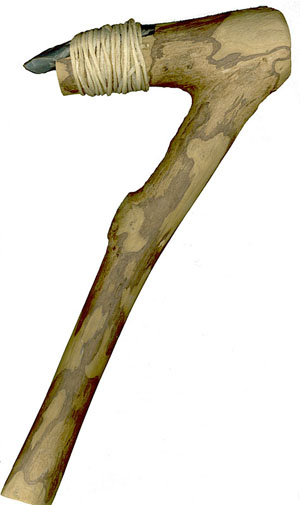
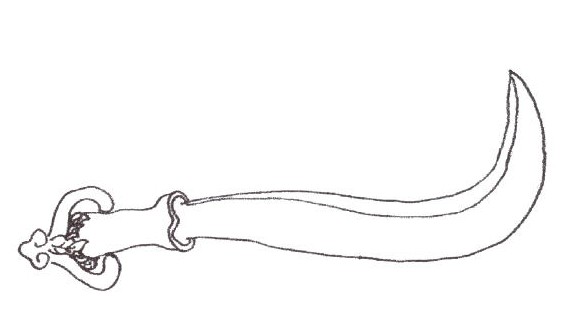
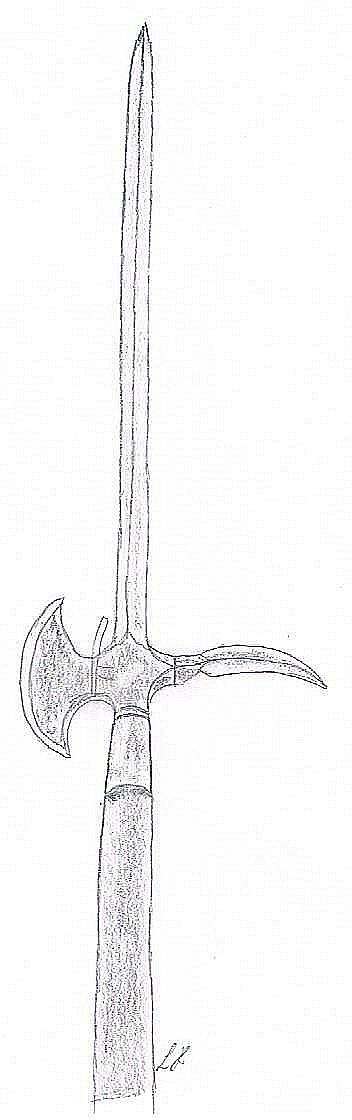
I've been working on some simple illustrations for an article on weapons in NOD #2. Not the greatest stuff in the world, but I'm pretty happy with it.


Clubs, Staves and Maces

Axes, Picks and Chopping Blades
Wednesday, May 12, 2010
Quick Idea on Weapons
Thinking about the "all weapons do 1d6 damage" rules, I thought it might be useful to come up with some other reasons why one might choose one weapon over another and came up with the following. You'll notice that I didn't differentiate between long swords and short swords. It seems to me if all weapons are going to do the same damage, you only need to differentiate between forms rather than small differences between weapons with the same basic form.And just for fun, consider it Open Game Content.
Axe/Curved sword/Pick/War hammer: +1 to damage due to all of the wielder's force being concentrated on a small cutting edge or piercing point
Bow: -1 to hit (difficult to learn) but attacks twice during a round (on normal initiative and at end), +1 to damage due to all of the wielder's force being concentrated on a small cutting edge or piercing point
Club/Staff: Nothing special
Crossbow: +1 to damage due to all of the wielder's force being concentrated on a small cutting edge or piercing point
Dagger: Always lose initiative against longer weapons, but +1 to hit due to the greater versatility that comes with multiple angles of attack
Flail: Ignores shield bonus to AC, +1 to disarm attacks because of the chain
Javelin/Throwing spear: Nothing special
Mace: Nothing special
Sling: Nothing special
Spear/Lance: Always win initiative against shorter weapons
Sword: +1 to hit due to the greater versatility that comes with multiple angles of attack
Two-handed axe/Pole arm: +2 to damage due to all of the wielder's force being concentrated on a small cutting edge and the heft of the weapon
Two-handed sword: +1 to hit due to the greater versatility that comes with multiple angles of attack, +1 to damage due to the weapon's heft
__________
Metal weapons (other than dagger) require a strength score of 9 or higher to wield properly, otherwise -1 penalty to hit.
Two-handed weapons (including bows and crossbows) require a strength score of 13 or higher to wield properly, otherwise -2 penalty to hit.
Labels:
open game content,
RPG,
weapons
Wednesday, May 5, 2010
What does 1d10 damage look like?
Apparently, like this ...
Unless you're playing a different edition, in which case this might look like 1d6 damage or 2d6 damage ...
Labels:
Inspiration,
Movie,
weapons
Sunday, April 18, 2010
A Sword by Any Other Name
Weapons are a big part of fantasy role-playing. They are one of the main tools of the trade for vanquishing evil (or promoting it) and relieving the local humanoids of their ill-gotten booty. They are also a way that many players, especially those playing fighting-men, define their characters – archer vs. swordsman vs. weird guy who specializes in the flail.
The thousand variations on the D&D theme have introduced a few different ways of handling weapons in play, from the concept of everything doing 1d6 damage in 0E, to the introduction of variable damage types soon after, to 3rd edition’s variable damage + variable critical hit ranges + variable critical hit multipliers + different sizes + different weapon types (bludgeoning/piercing/slashing and simple/martial/exotic). AD&D’s weapon speeds and weapon vs. AC table was another way of differentiating one weapon from another, i.e. making one’s choice of weapon (or weapons) an element that could influence success or failure in the course of play.
Now, I like lots of variety in gaming, but I also like enough simplicity that I can store the vital game rules in my brain so that I rarely have to consult a book or table during play. For this reason, my desire for weapon differentiation extends about as far as variable weapon damage. Unfortunately, as a person who likes to write game material, and as an ardent devotee of Clark Ashton Smith, describing NPCs with maces and short swords can get a bit boring. So, using my dog-eared copy of Palladium’s Compendium of Weapons & Armor (one of the essential books for a Referee or a write of game material in my humble opinion), I present this handy list of weapon synonyms, along with their region of origination or most common use. The weapon types are based on Moldvay's Red Book.
Axe, Battle (1d8)
• Africa – Elephant Axe
• Ancient – Khetan (Egypt)
• Central & South America – Maquahuilt
• East Asia – Masakari
• Europe – Bearded Axe, Bipennis, Doloire (wagoner’s axe), Sparte, Taber Axe, Toporok, Tuagh-gatha, Woodsman’s Axe
• India – Bullova, Tabar, Tabar-i-zin, Tungi, Venmuroo
• Near East – Ay-Balta
• Oceania – Balestarius, Head Axe, Udlimau
Axe, Hand (1d6) – includes sickles (*)
• Africa – Hunga-Munga, Shoka, Silepe, Throwing Irons
• Ancient – Dolabra (Rome), Epsilon Axe (Mid-East), Eye Axe (Mid-East), Novacula (Cyprus *)
• East Asia – Biliong, Kama, Kusarigama* (attached to chain), Toki Kakauroa, Piau
• Europe – Francisca, Hatchet, Hurlbat, Miner’s Axe, Thin Axe, Thrusting Axe
• India – Ancus (elephant goad), Galraki, Hoolurge, Kharga (sacrificial axe), Kodelly, Tongia
• Near East – Balta
• North America – Tomahawk
• Oceania – Adze, Arit, Kadjo, Kapak, Keerli, Pareh
Club (1d4) – includes staves (#)and throwing sticks (*)
• Africa – Kasrullah, Kerrie *, Rungu, Trombash *
• Ancient – Aclys * (Rome), Lisan (Egypt), Naboot # (Egypt)
• Central & South America – Iverapena, Macana, Pagaya
• East Asia – Bo #, Bokken (practice sword), Jo #, Kiam Bokiam, Tonfa, Yoribo
• Europe – Baculus, Blackjack, Cudgel, Maul, Quarterstaff #, Sap, Slung Shot, Truncheon
• India – Kirasoo *, Mugdar
• North America – Ga-Ne-U-Ga-O-Dus-Ha (deer antler club), I-Wata-Jinga, Ja-Dagna, Ja-Weti, Mandehi-Liguje (coup stick), Tiglun
• Oceania – Baggoro, Bi-Teran, Boomerang *, Burrong, Dowak *, Flat Club, Hoeroa, Japurunga, Kangaroo Rat *, Kauah, Kotiate, Kujerong, Kunnin *, Leonile, Lil-lil, Mabobo, Mattina, Meeri, Merai (jade club), Muragugna, Nil-li, Pacho, Pahu, Patu, Periperiu, Potu, Purijimala, Quirriang-an-wun, Rang-kwan, Sapakana, Siwalapa, Tambara, Tabutje, Tawha-tewha, Tindil, U’u, Ulas *, Uramata *, Waddy, Wahaika, Wairbi, Wakerti, Watilikri *, Weerba, Wirka, Yeamberren
Dagger (1d4) – includes knives
• Africa – Baswa Knife, Bracelet Dagger, Fantail Dagger, Forked Tongue Dagger, Kummya, Mongwanga, Pokwe, Telek
• Ancient – Falx Supina (Rome), Harpe (Greece), Parazonium (Greco-Roman), Pugio (Rome), Sica (Rome)
• East Asia – Aikuchi, Bade-Bade, Chopper, Dhaw, Golok, Hamidashi, Heyazashi, Himogatana, Koshigatana, Kozuka, Kubikiri, Kujungi, Kwaiken, Mit, Parang Ginah, Parang Latok, Piso Raut, Pisu Tonkeng, Raut, Rentjong, Siangkam (not quite a dagger, but close enough), Tanto, Tjaluk, To-Su
• Europe – Batardeau, Bodkin, Cinquedea, Chuchillo (folding knife), Degan, Dirk, Estradoit, Kidney Dagger, Main Gauche, Mattucashlass, Misercorde, Pavade, Poignard, Roundel Dagger, Scramasax, Sgain Dubh, Skain, Stiletto, Triple Dagger
• India – Bank, Buhj, Bich’hua, Bundi Katari, Chilanum, Choora, Haladie, Horn Dagger, Jamdhar Katari, Karoula, Katar, Katar Bank, Katar Dorlicaneh, Kukri, Maushtika, Moplah, Paiscush, Para-i-tutti, Phurbu, Pichangatti, Piha Kaetta, Saffdara, Vinchu
• Middle East – Acinaces. Bichaq, Chaqu (folding knife), Jambiya, Kard, Khanjar, Khanjarli, Khyber Knife, Kindjal, Pesh-Kabz, Qama, Zirah Bouk (mail-piercer)
• Oceania – Badik, Barong, Bayu, Beladau, Bolo, Buyu Knife, Halasan, Karambit, Kira (quartz blade), Kudi, Kudi Tranchang, Labo Belange, Lading, Mandaya Knife, Pahua (wooden), Palitai, Panabas, Sabit, Sadoep, Sakin, Sekin, Sewar, Tadji, Todo, Tolaki, Tombak Lada, Tuba,Wedong
Flail (1d6) – includes whips (*)
• Ancient – Flagellum (Rome)
• East Asia – Hui-Tho (bladed rope), Kau Sin Ke, Manriki Gusari, Nagegama, Nunchaku, Rante, Rante Ber Gangedug
• Europe – Ball & Chain, Bullwhip *, Cat-o’ Nine Tails *, Goupillon, Mace & Chain, Military Flail
• India – Binnol, Cumber-Jung
• Middle East – Kamcha *
• Oceania – Chemeti *, Kalus *, Laingtjat, Petjut *, Sa Tjat Koen
Mace (1d6)
• East Asia: Gunsen (war fan), Kiseru (smoking pipe), Suang-tu-fung
• Europe – Bouzdykan, Bulawa, Chacing Staff, Fist Mace, Hercules Club, Holy Water Sprinkler, Massuelle, Mazule, Pernat, Plombee, Quadrelle, Schestopjor
• India – Dhara, Gargaz, Garz, Lohangi, Ox Mace, Quoit, Shashpar, Sickle Mace, Singa (steel boomerang)
• Middle East – Dabus, Ox Mace
• Oceania – Gada, Ganjing
Pole Arm (1d10) – includes pikes (#) and tridents (*)
• Ancient – Romphaea (Greece), Sarissa # (Greece), Taru # (Egypt)
• Central & South America – Tepoztopilli
• East Asia – Bisento, Fang, Feruzue (concealed ball & chain), Half Moon, Hwa-Kek, Kongo-Zue, Kumade, Lajatang, Magari Yari *, Nagamaki, O-No, Shakujo Yari (concealed blade), Shinobi-Zue (concealed blade), Sjang Sutai, Shakwo, Sode Garami (sleeve tangler), Tetsubo, Tiger Trident *, Toyak
• Europe – Ahlspiess #, Awl Pike #, Beaked Axe, Berdysh/Berdiche, Bill, Bohemian Ear-Spoon, Brandestoc, Chauves-Spuris, Couteau De Breche, Croc, Falcastra, Falx, Feather Staff (concealed blades), Fuscina *, Glaive, Godendag, Halberd, Half Moon, Hippe, Jedburg Axe, Korseke, Langue De Boeuf (Ox Tongue), Lochaber Axe, Lucerne Hammer, Military Fork, Partizan, Pike #, Pitch Fork, Plancon A Picot #, Pole Axe, Runka, Sabre Halberd, Scaling Fork, Scorpion, Scythe, Spetum, Spontoon #, Sudis #, Voulge
• India – Khatramkha *, Kunjukdan, Saintie #, Veecharoval
• Oceania – Arbir, Hani
Spear (1d6) – includes lances (*) and throwing spears (#)
• Africa – Assegai #, Golo, Hinyuan, Kikuki, Koveh, Mahee, Makrigga, Mkuki, Sudanese Spear
• Ancient – Angon # (Franks), Cateia # (Celtic), Contus * (Rome), Egchos (Greece), Falarica (Rome), Framea * (Franks), Gaesom # (Rome), Jaculum # (Rome), Javelin # (Greece), Pelta # (Greece), Pilum # (Rome), Saunion # (Samnites), Spiculum # (Rome)
• East Asia – Dung, Hak, Hoko, Jarid #, Kamayari, Ken Shoka #, Lembing, Makura Yari, Nageyari #, Su Yari, Te Yari #, Yari
• Europe – Boar Spear, Harpoon #, Lance *, Lance-Ague * #, Pill, Zegaye *
• India – Ballam, Barchi, Bhala *, Garvo, Khundli P’Hansi, Laange, Patisthayana, Sang * (from camel back), Sangu, Shail *, Tschehouta
• Middle East – Rummh, Sinan
• North America – Ja-Mandehi *, Kahsita #
• Oceania – Aunurgith, Bandang, Bilari #, Budiak, Chimbane, Do-War, Enhero, Fal-Feg, Granggang, Irpull, Jiboru, Kadji, Kannai, Kapun, Kiero, Koy-Yung, Kujolio, Kuyan, Larna-Pe, Mon-Gil Mon-Gil, Mongile, Mu-Rungal, Nandum, Nerau, Pillara, Pouwhenua (also a staff), Sangkoh, Sanokat, Shanen Kopaton, Siligis #, Simbilan #, Sligi, Tahr Ruan, Tao, Tawok, Telempang, Tirrer, Tjunkuletti, To-Ono, Tombak, Tumpuling, Wainian, Wallunka, Wi Valli
Sword (1d8)
• Africa – Flyssa, Kaskara, Seme, Shotel
• Ancient – Spatha (Rome)
• East Asia – Dha, Dukn, Han Dachi, Katana, Sondang, Tashi
• Europe – Broadsword, Colichemarde, Craquemarte, Estoc, Falchion, Fleuret, Foil, Halstatt Sword, Karabela, Longsword, Pappenheimer, Rapier, Reiterpallasch, Sauschwerter (boar sword), Schiavona, Schnepfer, Spadroon, Tuck, Verdun
• India – Abbasi, Ahir, Dao, Firangi, Fish Spine Sword, Goliah, Gupti, Halab, Kastane, Katti Talwar, Khanda, Nagan, Pata, Pattisa, Pulouar, Ram Da’o, Sapola, Sirohi, Sosunpattah, Sultani, Talwar, Tegha
• Middle East – Karabela, Killj, Pala, Quaddara, Saif, Scimitar, Shamshir, Shashqa, Zulf-I-Khar
• Oceania – Campilan, Isau, Jumgheerdha, Pakayun, Peudeueng, Sikim Gala
Sword, Short (1d6)
• Africa – Babanga, Manople, Takouba, Wasa
• Ancient – Carp’s Tongue Sword (Europe), Gladius (Rome), Herebra (Phoenicia), Kledyv (Wales), Kopsh (Egypt), Machera (Greece), Sapara (Assyria), Seax (Anglo-Saxon), Xiphos (Greece)
• East Asia – Ama-Goi-Ken, Kamashimo Zashi, Ken, Kenuki Gata Tachi, Klewang, Luris Pedang, Ninjato, Opi, Pedang, Pira, Senangkas Bedok, Wakizashi
• Europe – Backsword, Badelaire, Baselard, Bilbo, Braquemar, Coustil A Croc, Cutlass, Dusack, Kantschar, Katzbalger, Palache, Sabre, Small Sword, Straight Sword
• India – Alamani , Ayda Katti, Kapee Dha, Kora, Shah Nawaz Khani, Surai, Zafar Takieh
• Middle East – Chereb, Goddara, Sassanid Sword, Yatagan
• Oceania – Beledah, Chundrick, Kris, Lopu, Manpau, Mentok, Perang Bedak, Parang Nabur, Parang Pandit, Piso Podang, Talibon, Tapak Kudak, Thinin
Sword, Two-Handed (1d10)
• Ancient – Dacian Falx (Celts, Germans)
• East Asia – Beheading Sword, No Dachi
• Europe – Bastard Sword, Claymore, Espadon, Executioner’s Sword, Flamberge, Zweihander
• India – Mel Puhah Bemoh
• Oceania – Dalwel
War Hammer (1d6) – includes picks (*)
• Europe – Bec-de-Corbin, Bisacuta *, Crowbill, Dagger Mace, Horseman’s Hammer, Martel de Fer, Oncin *, Tschekan Hammer
• India – Lohar *, Sabar *, Zaghnal *
• North America – Taavish
A few things I noticed while compiling this list …
Axes loom large in every culture. I’m no expert in weapon making, but my understanding is that axes only require a small strip of really good steel for their edge, so they’re much cheaper to make and maintain than swords.
Africa has some really cool axes, especially the throwing axes.
A band of kshatriyas armed with cumber-jungs sounds cooler than a band of fighting-men with flails. I would run away from both, but the former would make for a more picaresque story if I survived the experience.
Any player who was cool enough to have his fighter specialize with the Bohemian ear-spoon would probably get a secret +1 to all saving throws from me.
Oceania is club central, and if you set a game there you would probably want to differentiate the different types of clubs with different damage values.
East Asia has a penchant for making weapons that defy categories. The jitte, for example, is a parrying weapon that might be considered a mace. Other parrying weapons are the sai, segu, tau-kiev and tjabang. The adarga is a Moorish combination of spear and shield used for parrying. Europe had similar weapons; the lantern shield and sword shield. The bagh nakh, or “tiger claw” is an Indian weapon that is a bar with four or five curved blades sticking from it. Entangling or capturing weapons incude the bolas, lasso/lariat and catch pole (or mancatcher). I might do a post on exotic, strange weapons at a later date.
Daggers are ubiquitous. I’m convinced that every NPC you ever deal with should have a dagger on his or her person.
The thousand variations on the D&D theme have introduced a few different ways of handling weapons in play, from the concept of everything doing 1d6 damage in 0E, to the introduction of variable damage types soon after, to 3rd edition’s variable damage + variable critical hit ranges + variable critical hit multipliers + different sizes + different weapon types (bludgeoning/piercing/slashing and simple/martial/exotic). AD&D’s weapon speeds and weapon vs. AC table was another way of differentiating one weapon from another, i.e. making one’s choice of weapon (or weapons) an element that could influence success or failure in the course of play.
Now, I like lots of variety in gaming, but I also like enough simplicity that I can store the vital game rules in my brain so that I rarely have to consult a book or table during play. For this reason, my desire for weapon differentiation extends about as far as variable weapon damage. Unfortunately, as a person who likes to write game material, and as an ardent devotee of Clark Ashton Smith, describing NPCs with maces and short swords can get a bit boring. So, using my dog-eared copy of Palladium’s Compendium of Weapons & Armor (one of the essential books for a Referee or a write of game material in my humble opinion), I present this handy list of weapon synonyms, along with their region of origination or most common use. The weapon types are based on Moldvay's Red Book.
Axe, Battle (1d8)
• Africa – Elephant Axe
• Ancient – Khetan (Egypt)
• Central & South America – Maquahuilt
• East Asia – Masakari
• Europe – Bearded Axe, Bipennis, Doloire (wagoner’s axe), Sparte, Taber Axe, Toporok, Tuagh-gatha, Woodsman’s Axe
• India – Bullova, Tabar, Tabar-i-zin, Tungi, Venmuroo
• Near East – Ay-Balta
• Oceania – Balestarius, Head Axe, Udlimau
Axe, Hand (1d6) – includes sickles (*)
• Africa – Hunga-Munga, Shoka, Silepe, Throwing Irons
• Ancient – Dolabra (Rome), Epsilon Axe (Mid-East), Eye Axe (Mid-East), Novacula (Cyprus *)
• East Asia – Biliong, Kama, Kusarigama* (attached to chain), Toki Kakauroa, Piau
• Europe – Francisca, Hatchet, Hurlbat, Miner’s Axe, Thin Axe, Thrusting Axe
• India – Ancus (elephant goad), Galraki, Hoolurge, Kharga (sacrificial axe), Kodelly, Tongia
• Near East – Balta
• North America – Tomahawk
• Oceania – Adze, Arit, Kadjo, Kapak, Keerli, Pareh
Club (1d4) – includes staves (#)and throwing sticks (*)
• Africa – Kasrullah, Kerrie *, Rungu, Trombash *
• Ancient – Aclys * (Rome), Lisan (Egypt), Naboot # (Egypt)
• Central & South America – Iverapena, Macana, Pagaya
• East Asia – Bo #, Bokken (practice sword), Jo #, Kiam Bokiam, Tonfa, Yoribo
• Europe – Baculus, Blackjack, Cudgel, Maul, Quarterstaff #, Sap, Slung Shot, Truncheon
• India – Kirasoo *, Mugdar
• North America – Ga-Ne-U-Ga-O-Dus-Ha (deer antler club), I-Wata-Jinga, Ja-Dagna, Ja-Weti, Mandehi-Liguje (coup stick), Tiglun
• Oceania – Baggoro, Bi-Teran, Boomerang *, Burrong, Dowak *, Flat Club, Hoeroa, Japurunga, Kangaroo Rat *, Kauah, Kotiate, Kujerong, Kunnin *, Leonile, Lil-lil, Mabobo, Mattina, Meeri, Merai (jade club), Muragugna, Nil-li, Pacho, Pahu, Patu, Periperiu, Potu, Purijimala, Quirriang-an-wun, Rang-kwan, Sapakana, Siwalapa, Tambara, Tabutje, Tawha-tewha, Tindil, U’u, Ulas *, Uramata *, Waddy, Wahaika, Wairbi, Wakerti, Watilikri *, Weerba, Wirka, Yeamberren
Dagger (1d4) – includes knives
• Africa – Baswa Knife, Bracelet Dagger, Fantail Dagger, Forked Tongue Dagger, Kummya, Mongwanga, Pokwe, Telek
• Ancient – Falx Supina (Rome), Harpe (Greece), Parazonium (Greco-Roman), Pugio (Rome), Sica (Rome)
• East Asia – Aikuchi, Bade-Bade, Chopper, Dhaw, Golok, Hamidashi, Heyazashi, Himogatana, Koshigatana, Kozuka, Kubikiri, Kujungi, Kwaiken, Mit, Parang Ginah, Parang Latok, Piso Raut, Pisu Tonkeng, Raut, Rentjong, Siangkam (not quite a dagger, but close enough), Tanto, Tjaluk, To-Su
• Europe – Batardeau, Bodkin, Cinquedea, Chuchillo (folding knife), Degan, Dirk, Estradoit, Kidney Dagger, Main Gauche, Mattucashlass, Misercorde, Pavade, Poignard, Roundel Dagger, Scramasax, Sgain Dubh, Skain, Stiletto, Triple Dagger
• India – Bank, Buhj, Bich’hua, Bundi Katari, Chilanum, Choora, Haladie, Horn Dagger, Jamdhar Katari, Karoula, Katar, Katar Bank, Katar Dorlicaneh, Kukri, Maushtika, Moplah, Paiscush, Para-i-tutti, Phurbu, Pichangatti, Piha Kaetta, Saffdara, Vinchu
• Middle East – Acinaces. Bichaq, Chaqu (folding knife), Jambiya, Kard, Khanjar, Khanjarli, Khyber Knife, Kindjal, Pesh-Kabz, Qama, Zirah Bouk (mail-piercer)
• Oceania – Badik, Barong, Bayu, Beladau, Bolo, Buyu Knife, Halasan, Karambit, Kira (quartz blade), Kudi, Kudi Tranchang, Labo Belange, Lading, Mandaya Knife, Pahua (wooden), Palitai, Panabas, Sabit, Sadoep, Sakin, Sekin, Sewar, Tadji, Todo, Tolaki, Tombak Lada, Tuba,Wedong
Flail (1d6) – includes whips (*)
• Ancient – Flagellum (Rome)
• East Asia – Hui-Tho (bladed rope), Kau Sin Ke, Manriki Gusari, Nagegama, Nunchaku, Rante, Rante Ber Gangedug
• Europe – Ball & Chain, Bullwhip *, Cat-o’ Nine Tails *, Goupillon, Mace & Chain, Military Flail
• India – Binnol, Cumber-Jung
• Middle East – Kamcha *
• Oceania – Chemeti *, Kalus *, Laingtjat, Petjut *, Sa Tjat Koen
Mace (1d6)
• East Asia: Gunsen (war fan), Kiseru (smoking pipe), Suang-tu-fung
• Europe – Bouzdykan, Bulawa, Chacing Staff, Fist Mace, Hercules Club, Holy Water Sprinkler, Massuelle, Mazule, Pernat, Plombee, Quadrelle, Schestopjor
• India – Dhara, Gargaz, Garz, Lohangi, Ox Mace, Quoit, Shashpar, Sickle Mace, Singa (steel boomerang)
• Middle East – Dabus, Ox Mace
• Oceania – Gada, Ganjing
Pole Arm (1d10) – includes pikes (#) and tridents (*)
• Ancient – Romphaea (Greece), Sarissa # (Greece), Taru # (Egypt)
• Central & South America – Tepoztopilli
• East Asia – Bisento, Fang, Feruzue (concealed ball & chain), Half Moon, Hwa-Kek, Kongo-Zue, Kumade, Lajatang, Magari Yari *, Nagamaki, O-No, Shakujo Yari (concealed blade), Shinobi-Zue (concealed blade), Sjang Sutai, Shakwo, Sode Garami (sleeve tangler), Tetsubo, Tiger Trident *, Toyak
• Europe – Ahlspiess #, Awl Pike #, Beaked Axe, Berdysh/Berdiche, Bill, Bohemian Ear-Spoon, Brandestoc, Chauves-Spuris, Couteau De Breche, Croc, Falcastra, Falx, Feather Staff (concealed blades), Fuscina *, Glaive, Godendag, Halberd, Half Moon, Hippe, Jedburg Axe, Korseke, Langue De Boeuf (Ox Tongue), Lochaber Axe, Lucerne Hammer, Military Fork, Partizan, Pike #, Pitch Fork, Plancon A Picot #, Pole Axe, Runka, Sabre Halberd, Scaling Fork, Scorpion, Scythe, Spetum, Spontoon #, Sudis #, Voulge
• India – Khatramkha *, Kunjukdan, Saintie #, Veecharoval
• Oceania – Arbir, Hani
Spear (1d6) – includes lances (*) and throwing spears (#)
• Africa – Assegai #, Golo, Hinyuan, Kikuki, Koveh, Mahee, Makrigga, Mkuki, Sudanese Spear
• Ancient – Angon # (Franks), Cateia # (Celtic), Contus * (Rome), Egchos (Greece), Falarica (Rome), Framea * (Franks), Gaesom # (Rome), Jaculum # (Rome), Javelin # (Greece), Pelta # (Greece), Pilum # (Rome), Saunion # (Samnites), Spiculum # (Rome)
• East Asia – Dung, Hak, Hoko, Jarid #, Kamayari, Ken Shoka #, Lembing, Makura Yari, Nageyari #, Su Yari, Te Yari #, Yari
• Europe – Boar Spear, Harpoon #, Lance *, Lance-Ague * #, Pill, Zegaye *
• India – Ballam, Barchi, Bhala *, Garvo, Khundli P’Hansi, Laange, Patisthayana, Sang * (from camel back), Sangu, Shail *, Tschehouta
• Middle East – Rummh, Sinan
• North America – Ja-Mandehi *, Kahsita #
• Oceania – Aunurgith, Bandang, Bilari #, Budiak, Chimbane, Do-War, Enhero, Fal-Feg, Granggang, Irpull, Jiboru, Kadji, Kannai, Kapun, Kiero, Koy-Yung, Kujolio, Kuyan, Larna-Pe, Mon-Gil Mon-Gil, Mongile, Mu-Rungal, Nandum, Nerau, Pillara, Pouwhenua (also a staff), Sangkoh, Sanokat, Shanen Kopaton, Siligis #, Simbilan #, Sligi, Tahr Ruan, Tao, Tawok, Telempang, Tirrer, Tjunkuletti, To-Ono, Tombak, Tumpuling, Wainian, Wallunka, Wi Valli
Sword (1d8)
• Africa – Flyssa, Kaskara, Seme, Shotel
• Ancient – Spatha (Rome)
• East Asia – Dha, Dukn, Han Dachi, Katana, Sondang, Tashi
• Europe – Broadsword, Colichemarde, Craquemarte, Estoc, Falchion, Fleuret, Foil, Halstatt Sword, Karabela, Longsword, Pappenheimer, Rapier, Reiterpallasch, Sauschwerter (boar sword), Schiavona, Schnepfer, Spadroon, Tuck, Verdun
• India – Abbasi, Ahir, Dao, Firangi, Fish Spine Sword, Goliah, Gupti, Halab, Kastane, Katti Talwar, Khanda, Nagan, Pata, Pattisa, Pulouar, Ram Da’o, Sapola, Sirohi, Sosunpattah, Sultani, Talwar, Tegha
• Middle East – Karabela, Killj, Pala, Quaddara, Saif, Scimitar, Shamshir, Shashqa, Zulf-I-Khar
• Oceania – Campilan, Isau, Jumgheerdha, Pakayun, Peudeueng, Sikim Gala
Sword, Short (1d6)
• Africa – Babanga, Manople, Takouba, Wasa
• Ancient – Carp’s Tongue Sword (Europe), Gladius (Rome), Herebra (Phoenicia), Kledyv (Wales), Kopsh (Egypt), Machera (Greece), Sapara (Assyria), Seax (Anglo-Saxon), Xiphos (Greece)
• East Asia – Ama-Goi-Ken, Kamashimo Zashi, Ken, Kenuki Gata Tachi, Klewang, Luris Pedang, Ninjato, Opi, Pedang, Pira, Senangkas Bedok, Wakizashi
• Europe – Backsword, Badelaire, Baselard, Bilbo, Braquemar, Coustil A Croc, Cutlass, Dusack, Kantschar, Katzbalger, Palache, Sabre, Small Sword, Straight Sword
• India – Alamani , Ayda Katti, Kapee Dha, Kora, Shah Nawaz Khani, Surai, Zafar Takieh
• Middle East – Chereb, Goddara, Sassanid Sword, Yatagan
• Oceania – Beledah, Chundrick, Kris, Lopu, Manpau, Mentok, Perang Bedak, Parang Nabur, Parang Pandit, Piso Podang, Talibon, Tapak Kudak, Thinin
Sword, Two-Handed (1d10)
• Ancient – Dacian Falx (Celts, Germans)
• East Asia – Beheading Sword, No Dachi
• Europe – Bastard Sword, Claymore, Espadon, Executioner’s Sword, Flamberge, Zweihander
• India – Mel Puhah Bemoh
• Oceania – Dalwel
War Hammer (1d6) – includes picks (*)
• Europe – Bec-de-Corbin, Bisacuta *, Crowbill, Dagger Mace, Horseman’s Hammer, Martel de Fer, Oncin *, Tschekan Hammer
• India – Lohar *, Sabar *, Zaghnal *
• North America – Taavish
A few things I noticed while compiling this list …
Axes loom large in every culture. I’m no expert in weapon making, but my understanding is that axes only require a small strip of really good steel for their edge, so they’re much cheaper to make and maintain than swords.
Africa has some really cool axes, especially the throwing axes.
A band of kshatriyas armed with cumber-jungs sounds cooler than a band of fighting-men with flails. I would run away from both, but the former would make for a more picaresque story if I survived the experience.
Any player who was cool enough to have his fighter specialize with the Bohemian ear-spoon would probably get a secret +1 to all saving throws from me.
Oceania is club central, and if you set a game there you would probably want to differentiate the different types of clubs with different damage values.
East Asia has a penchant for making weapons that defy categories. The jitte, for example, is a parrying weapon that might be considered a mace. Other parrying weapons are the sai, segu, tau-kiev and tjabang. The adarga is a Moorish combination of spear and shield used for parrying. Europe had similar weapons; the lantern shield and sword shield. The bagh nakh, or “tiger claw” is an Indian weapon that is a bar with four or five curved blades sticking from it. Entangling or capturing weapons incude the bolas, lasso/lariat and catch pole (or mancatcher). I might do a post on exotic, strange weapons at a later date.
Daggers are ubiquitous. I’m convinced that every NPC you ever deal with should have a dagger on his or her person.
Labels:
Legacy DnD,
RPG,
weapons
Subscribe to:
Posts (Atom)


-Segunda_Edad_del_Hierro.jpg)